



Think of HR compliance as the guardrails that keep your business safe and on track. Without a clear checklist, it’s easy to overlook small but important requirements—like new hire reporting, workplace safety notices, or payroll recordkeeping. These aren’t just administrative tasks; they’re legal obligations.
A proper HR compliance checklist should cover every stage of the employee lifecycle—from hiring and onboarding to payroll, benefits, and workplace culture. It’s not just about staying out of trouble with the IRS or Department of Labor; it’s about building a fair, consistent, and professional workplace.
Many businesses create a “master HR checklist” and review it quarterly or annually to catch changes in federal or state laws. That way, you’re not scrambling when a new law takes effect—you’re already ahead of it.
👉 For the full picture of legal hiring, start with our main guide on Hiring Guidelines for US Employers.
Why HR Compliance Matters
Compliance might sound like a burden, but in reality, it’s a safety net for your business. Here’s why it matters:
- Legal Protection
HR compliance shields you from penalties, audits, and lawsuits. Agencies like the EEOC, OSHA, and the Department of Labor monitor employer practices closely. A single violation—even if unintentional—can cost thousands of dollars. - Fair and Inclusive Hiring
Laws like Title VII of the Civil Rights Act and the ADA ensure candidates are evaluated based on merit, not bias. Following them isn’t just a legal requirement; it makes your hiring more effective by widening your talent pool. - Stronger Employee Relationships
When employees see that you follow wage laws, honor benefits, and take workplace safety seriously, they trust you more. Trust directly impacts retention and morale. - Business Growth
A compliant workplace is scalable. If you lay the right legal foundation now, hiring your 10th, 50th, or 100th employee becomes a smoother process.
👉 Learn more about the foundational rules in our guide: The 3 Most Important HR Laws in the USA Explained.
HR Compliance Checklist for US Employers

Here’s a more detailed version of the checklist you should maintain:
| Category | Key Requirements | Why It Matters |
| Hiring & Onboarding | Verify Form I-9, follow EEOC guidelines, report new hires to the state, give mandatory notices. | Prevents discrimination claims and ensures work eligibility. |
| Payroll & Taxes | EIN registration, proper tax withholdings, overtime compliance, W-2/1099 reporting. | Keeps you IRS-compliant and avoids wage lawsuits. |
| Classification | Distinguish employees from contractors correctly. | Misclassification is one of the costliest employer mistakes. |
| Benefits & Leave | ACA compliance (if 50+ employees), FMLA leave, workers’ comp, unemployment insurance. | Protects employee rights and avoids lawsuits. |
| Workplace Safety | OSHA standards, harassment training, clear reporting channels. | Builds a safe, inclusive culture. |
| Recordkeeping | Maintain payroll, personnel files, I-9s, and benefits records. | Provides protection during audits and disputes. |
| Posters & Notices | Display updated labor law, OSHA, and wage posters. | Required by federal and state law. |
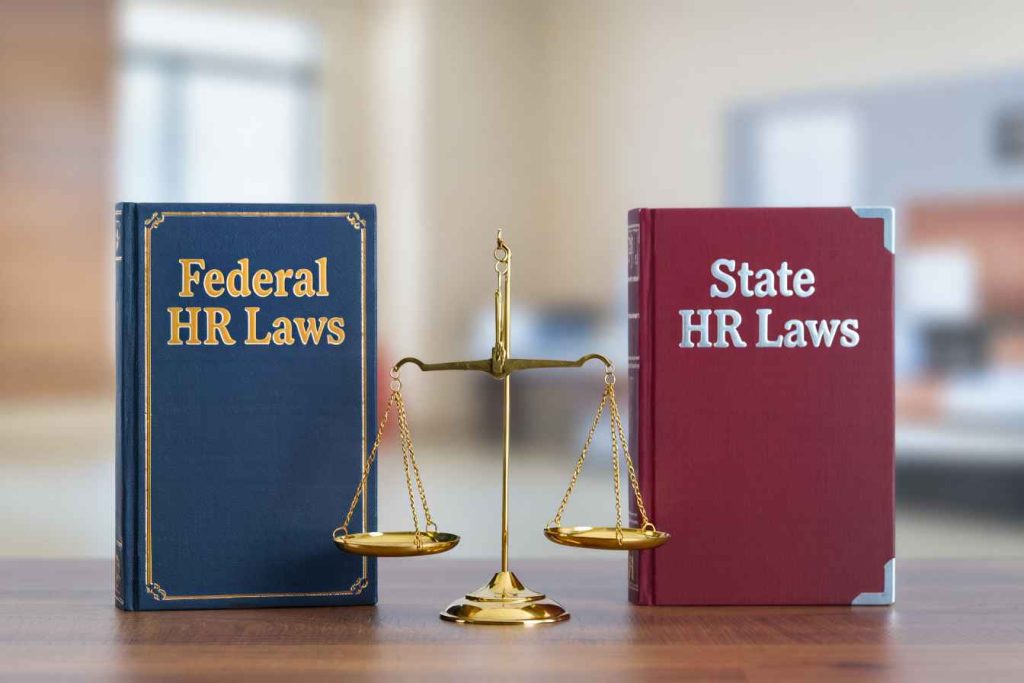
💡 Pro tip: Keep both a federal checklist and a state-specific checklist, since requirements often differ.
Hiring & Interview Compliance
Many compliance issues start at the interview stage. Employers often think they’re making casual conversation, but one poorly worded question can cross into illegal territory.
What not to ask:
- “Are you married?”
- “Do you plan to have kids?”
- “What religion do you practice?”
- “How old are you?”
What to ask instead (job-related):
- “This role requires occasional weekend shifts. Are you available during those times?”
- “This job involves lifting up to 40 lbs. Can you perform that with or without accommodation?”
Following EEOC guidelines ensures your process is merit-based and unbiased.
👉 For more detail, see Interview Questions You Should Never Ask a Candidate.
Employee Classification: Contractors vs. Employees
One of the biggest traps in HR compliance is misclassification. Many businesses think they can save money by hiring workers as “independent contractors” when they should legally be employees.
Here’s a clear breakdown:
| Employees | Independent Contractors |
| Controlled by employer (schedule, location, methods). | Control their own work methods and hours. |
| Paid via payroll with taxes withheld. | Paid per invoice; responsible for their own taxes. |
| Eligible for benefits (health, PTO, retirement). | Not eligible for employee benefits. |
| Covered by wage and hour laws. | Not covered by wage and overtime rules. |
| Ongoing relationship with employer. | Temporary or project-based relationship. |
👉 Learn more in our guide: How to Legally Hire Independent Contractors in the USA.
Payroll, Taxes, and Wage Laws
Payroll is one of the most compliance-heavy areas for employers. The Fair Labor Standards Act (FLSA) sets baseline rules, but many states add their own.
Here’s what you must do:
- Register for an EIN with the IRS.
- Withhold payroll taxes: federal income tax, Social Security, Medicare, and any state taxes.
- Pay at least minimum wage: currently $7.25 federally, though many states require more.
- Pay overtime: at 1.5x the hourly rate for non-exempt employees working over 40 hours/week.
- Issue annual tax forms: W-2s for employees, 1099-NEC for contractors.
👉 For employer-specific guidance, see How to Legally Hire an Employee in the USA.
Workplace Posters & Notices
Posting requirements often get overlooked—but they’re mandatory. Employers must display certain federal and state posters in a visible location.
Commonly required posters include:
- FLSA Minimum Wage Poster – Displays current federal minimum wage.
- EEO Poster – Explains employee rights under anti-discrimination laws.
- OSHA Job Safety Poster – Outlines health and safety rights.
- State-specific posters – Examples include paid sick leave, workers’ compensation, or local wage rules.
💡 If you have remote employees, digital access (via email or intranet) is required so they can see the same information.
Common HR Compliance Mistakes
Even experienced employers slip up. Here are the most common errors:
- Skipping I-9 verification – Required for all new employees.
- Failing to report new hires – Every state has a reporting system.
- Ignoring state-specific laws – Some states have higher minimum wages or paid sick leave requirements.
- Misclassifying workers – Labeling employees as contractors to save costs is a major red flag.
- Incomplete recordkeeping – Missing payroll or tax records can hurt you during audits.
👉 To avoid these mistakes, revisit our Federal Hiring Guidelines Every Employer Should Know.
Why Compliance Builds Stronger Companies
Compliance isn’t just a checklist—it’s a business advantage. Here’s how it strengthens your company:
- Trust and Retention: Employees feel secure when they know their rights are respected.
- Reputation: Compliance makes your company attractive to candidates who want stability and professionalism.
- Efficiency: Standardized processes cut down on confusion and errors.
- Scalability: Once compliance systems are in place, you can expand your workforce smoothly without reinventing the wheel.
- Risk Reduction: You spend less time worrying about lawsuits and more time focusing on growth.
Compliance is more than following the rules—it’s about building a business people want to work for.
FAQs on HR Compliance for US Employers
Q1. Do HR compliance laws apply to small businesses?
Yes, but some laws (like FMLA or ACA health insurance requirements) only apply once you hit certain employee thresholds. Always check coverage levels.
Q2. What happens if I misclassify an employee as a contractor?
You may owe back taxes, unpaid wages, and penalties. Misclassification is a major focus for the IRS and DOL.
Q3. How often should I update my HR compliance checklist?
At least annually. Laws change frequently, and state-level updates can affect your responsibilities.
Q4. Do I need to display federal posters if I have remote employees?
Yes, but you can also distribute them electronically. The key is that employees have access.
Q5. What’s the easiest way to stay compliant?
Standardize your hiring and payroll processes, use a checklist, and consult HR professionals or legal counsel when in doubt.